Seoraksan Day Trip
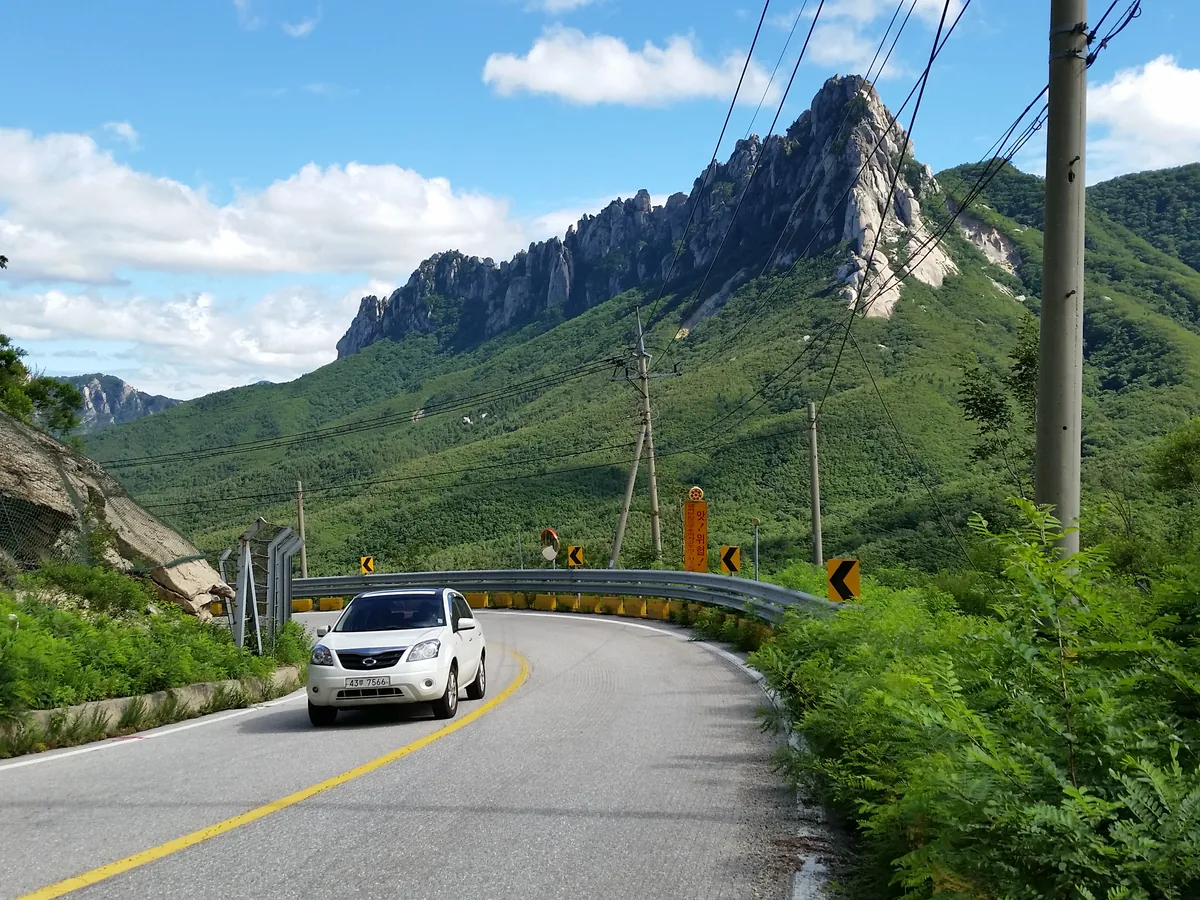
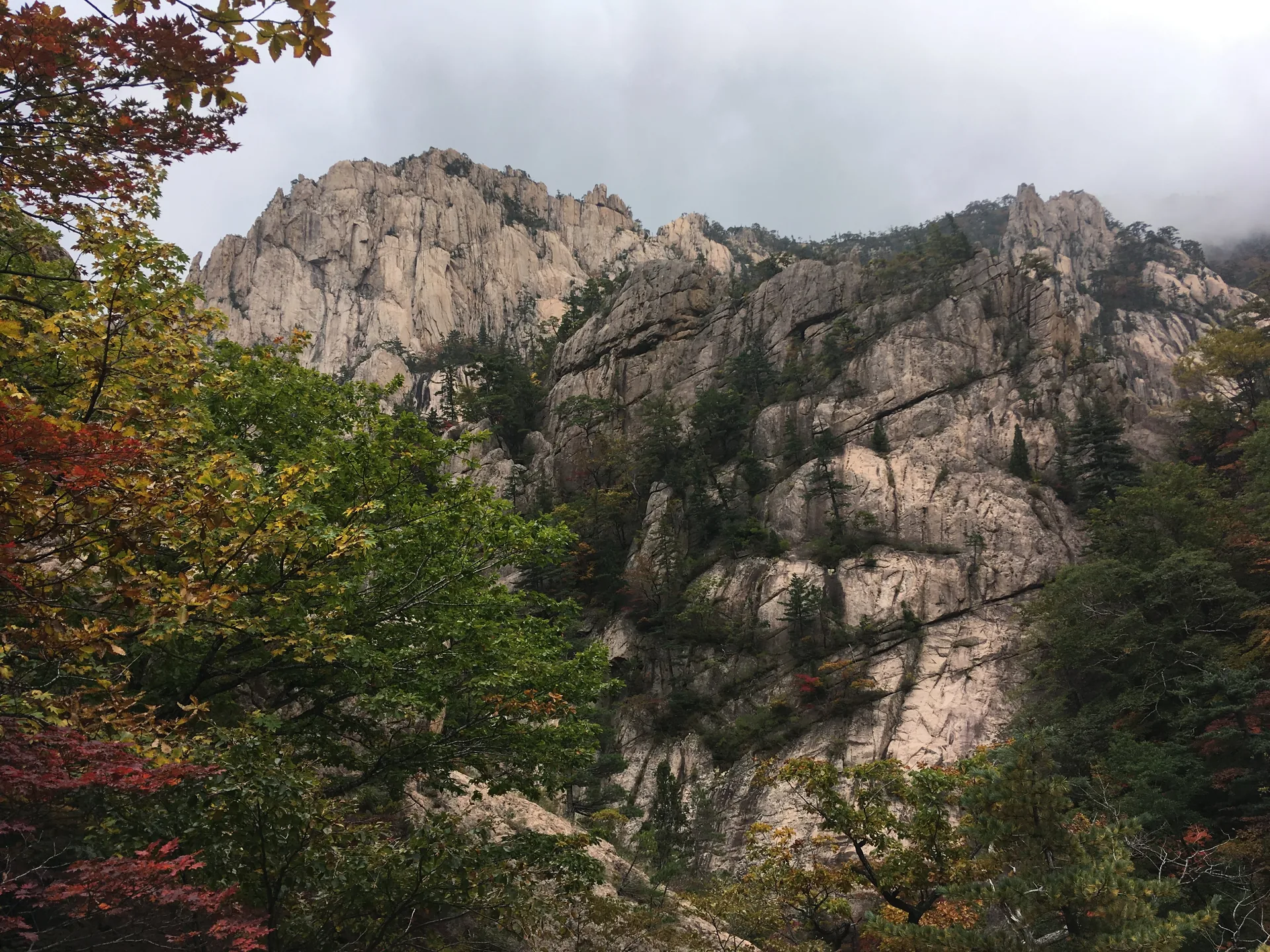
The granite peaks of Seoraksan National Park in autumn, near Sokcho, South Korea

Seoraksan National Park · near Sokcho, from Seoul

Granite, a Giant Buddha, and Korea's First Autumn

4.8 (74 verified reviews · GetYourGuide)

The granite spires of Seoraksan rise straight out of the forest on Korea's east coast — with a bronze Buddha the size of a house, a cable car to a 13th-century fortress ridge, and the country's most famous autumn colour. A mountain-and-sea day from Seoul.

What it isA full day from Seoul to Seoraksan National Park — granite peaks, the cable-car ridge, a giant bronze Buddha at Sinheungsa Temple, and the East Sea coast
The mountainSouth Korea's premier granite-peak park and a UNESCO Biosphere Reserve; highest peak Daecheongbong at 1,708 m, the country's third-highest
The catchIt's ~2.5 hours each way, and the cable car takes no online booking — it's same-day, weather-gated, and queues 2–3 hours at foliage peak
When to goFamous for autumn colour: the summit turns in late September, the valleys around 20–25 October — peak colour and peak crowds together

Why Seoraksan

Why Seoraksan

Korea's granite showpiece

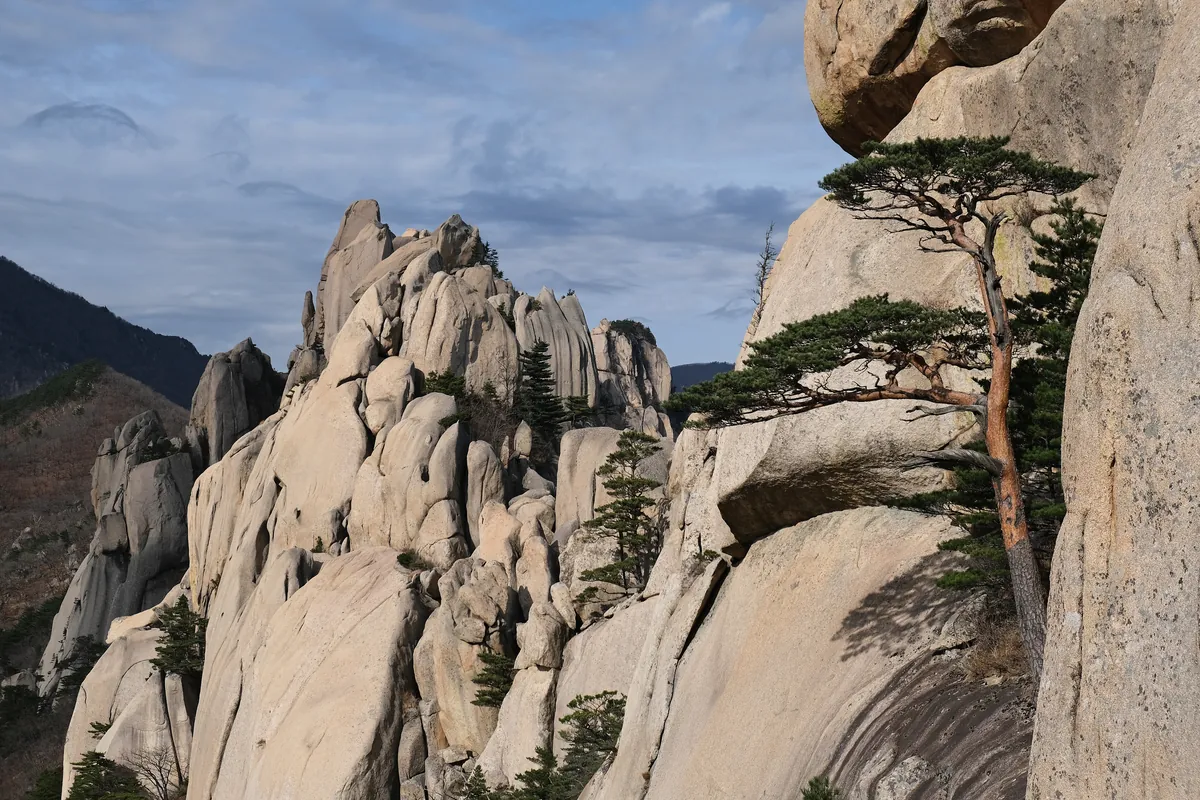
Seoraksan is South Korea's premier granite-peak national park — a UNESCO Biosphere Reserve of spires, ridgelines, forested valleys and waterfalls rising near the east-coast city of Sokcho. Its highest peak, Daecheongbong, tops out at 1,708 metres, the third-highest in the country. The name itself evokes the pale rock: 'Seorak' reads as snow-white stone. It is, simply, the mountain Koreans travel to when they want mountains.

The country's most famous autumn

More than any other peak, Seoraksan is where Korea watches the leaves turn. It is one of the first places in the country to colour each year — the change starts high on Daecheongbong in late September and cascades down to the valleys by around the 20th of October. For a few weeks the granite is set against crimson and gold, and the whole country, it can feel, drives up to see it.

Mountain and sea in one day

What makes it work as a day trip is geography: the Seoul–Yangyang Expressway, tunnelled straight through the mountains, put 1,708-metre granite and the blue East Sea within about two and a half hours of the capital. You can ride a cable car to a fortress ridge in the morning and stand beneath a seaside Goddess of Mercy over the ocean in the afternoon — a genuine mountain-to-sea day out of Seoul.

Your day, two ways

Your day, two ways

One entrance, two completely different days. Be honest with yourself about which one you're here for — it decides everything, including whether a tour suits you.

The easy day

Cable car, temple & an easy valley walk

Ride the cable car ten minutes up to the Gwongeumseong fortress ridge for a sweep over Ulsanbawi, Sokcho and the East Sea; stand beneath the giant bronze Great Unification Buddha at Sinheungsa Temple; and stroll a flat valley path to Biseondae rock or the waterfalls. It suits almost anyone, takes about half a day on the ground, and it's exactly what a packaged day tour delivers.

The hard day

The 808 steps up Ulsanbawi

Or you climb Ulsanbawi — a cluster of six granite peaks whose final ascent is some 808 steel steps bolted to the bare rock, about four kilometres and 60–90 minutes of real cardio each way. The view from the top is the park's finest, but it needs a full, unhurried day and reasonable fitness — which is why it's a do-it-yourself trip, not a group-tour stop.
2–3 hrsthe peak-autumn queue for a cable-car ticket you cannot reserve online

The cable-car lockout

The single most useful thing to know about Seoraksan, and the thing every first-timer gets caught by: the cable car cannot be booked ahead.

No online booking

The Seorak cable car takes no advance reservation. Tickets are same-day, on-site, first-come only, and there is no one-way ticket — you buy a round trip the moment you enter the park, or you wait.

Weather-gated

It's weather-dependent: the operator posts a daily go/no-go and there are no guaranteed hours. A clear morning can turn, and the cars stop. No tour, and no amount of planning, changes that — it's the one risk nobody can remove.

It sells out

On a normal day the wait is short. In autumn foliage season the queue runs two to three hours, and late arrivals get a much later slot or miss out entirely. Arriving early is the only real fix.

How a tour helps (honestly)

A group tour lands you at the entrance early and the guide makes the ticket run first thing, so you skip the worst of the late-arrival lockout and the transport headache. It de-risks the timing — not the weather. That distinction is the honest heart of the tour-versus-DIY choice here.

What you'll see

What you'll see

The set-pieces of a Seoraksan day, from the valley floor to the coast.

Sinheungsa

The Great Unification Buddha

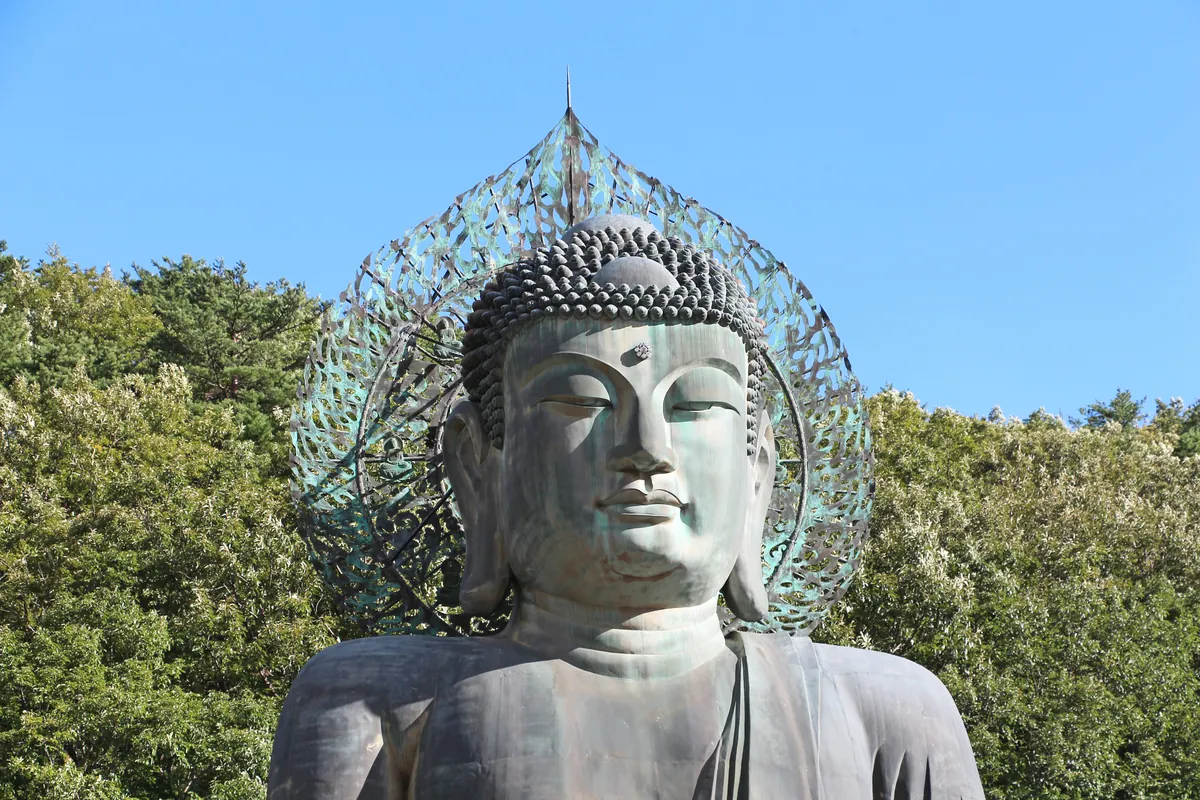
At the entrance to Sinheungsa Temple sits the Tongil Daebul — a gilt-bronze seated Buddha nearly 15 metres tall, close to 19 with its pedestal, cast as a wish for Korean reunification and billed as the largest seated bronze Buddha in the world. It is the first thing most day-trippers meet, and it sets the scale.

The cable car

Gwongeumseong fortress ridge

The cable car rises about ten minutes to near Gwongeumseong, the ruins of a 13th-century Goryeo fortress. A short walk up the railed path reaches the viewpoint, where Ulsanbawi's granite, the city of Sokcho and the blue East Sea all open out in a single sweep.

Biseondae

The easy valley walk

From the entrance a gentle path of about three and a half kilometres follows a clear stream to Biseondae rock — the walk everyone can do, and in autumn a corridor of maple reflected in the water. The Yukdam and Biryong falls trail is a similar, streamside alternative.

Ulsanbawi

The granite giant

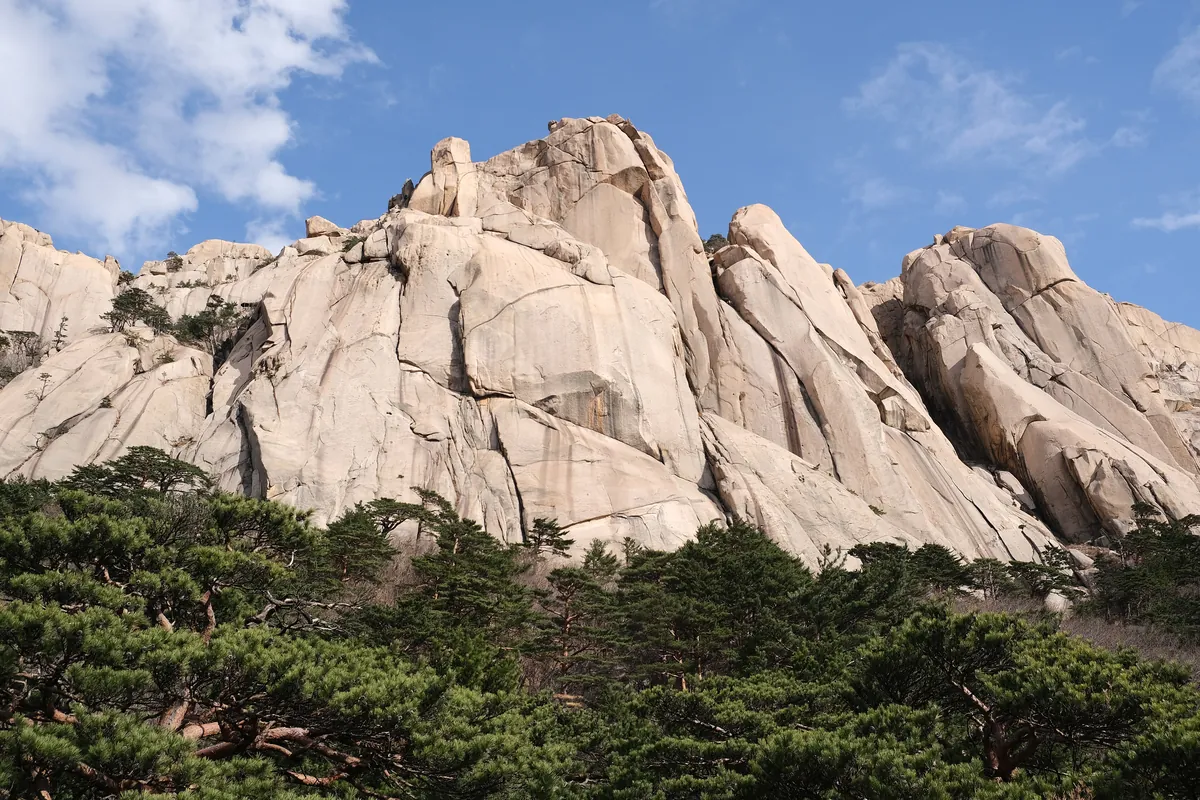
Ulsanbawi is the park's icon: six granite peaks rising to about 873 metres, their final stretch climbed by roughly 808 steel steps. Even if you don't climb it, you'll see it from the cable-car ridge — the great pale wall that defines the skyline.

Naksansa

The seaside temple

Many day tours pair the mountain with Naksansa, a rare coastal temple founded in 671 AD, where a 16-metre white-granite Goddess of Mercy stands on a cliff gazing over the East Sea. It's the 'sea' half of the mountain-and-sea day, and a serene close to it.

Sokcho

The gateway coast

Sokcho, the small city below the park, is the gateway — bus terminal, east-coast beaches and famous seafood markets. Day-trippers pass through it; anyone staying overnight to climb Ulsanbawi uses it as a base.

When to go

When the mountain turns

Autumn is the whole story here — but the timing is specific, and it comes with the year's biggest crowds. Here's how the seasons play out.

  1. Autumn: late September to late October

    The colour starts high, on the Daecheongbong summit, in late September, and cascades down to the tourist-trail and valley level by roughly the 20th to 25th of October. That fortnight is the headline — and the single best reason to time a visit. It is also when the mountain is busiest.

  2. Peak colour means peak crowds

    Late October is when the cable-car queue hits its two-to-three-hour worst and the roads and buses from Seoul jam on weekends. If you can, go on a weekday and start early. The reward — granite framed by crimson and gold — is genuinely one of the sights of the Korean year.

  3. Spring, summer, winter

    Spring brings azaleas and fresh green with milder crowds; summer is lush and humid with the waterfalls at full flow; winter dusts the granite with snow, dramatic but cold, and restricts some high trails. Every season has its case, but autumn is the one people plan a year around.

  4. Watch the foliage forecast

    Because the peak shifts a little year to year, keep an eye on Korea's autumn-foliage forecast through September if the colour is your reason for coming. Booking with free cancellation lets you hold a date and adjust as the forecast firms up.

Tour, or do it yourself?

Tour, or do it yourself?

Do it yourselfGuided day tour
Getting thereExpress bus Seoul → Sokcho (~2h20), then local bus 7/7-1 to the park — no direct serviceRound-trip coach from central Seoul, driven for you
The cable carYou join the same-day queue yourself — 2–3 hours at foliage peakGuide makes the ticket run early; you skip the worst of the queue
CostCheap on paper: ~₩40–60k bus + ₩15k cable car (park & temple free)~US$57–68, everything bundled with a guide
Best forStaying overnight in Sokcho and climbing Ulsanbawi at your own paceThe cable-car, temple and coast highlights in one Seoul day, no car, no queue gamble
The dayLongest and most flexible; you eat the full transfer chain~12 hours, ~5 of them on the coach, fixed schedule

Seoraksan day trips from Seoul

Find a Seoraksan day for your dates

Every tour below is bookable through GetYourGuide, with live availability and the final price shown in your own currency before you pay — round-trip coach from Seoul and a guide included.

Live availability and pricing from GetYourGuide, shown in your own currency.

See all Seoul & Seoraksan day trips ↗

Planning your day

Planning your day

It's a long day — budget for it

However you go, Seoraksan from Seoul is about two and a half hours each way, so a tour runs roughly 12 hours door to door with four to five of them on the coach. Keep the day clear, start early, and don't plan anything demanding for that evening.

Park entry is free

National-park admission was abolished in May 2023, and temple entry is now free too, so the only paid item inside is the cable car at around ₩15,000–16,000, plus parking if you drive. Bring a little cash for the cable car and snacks.

Dress for a mountain

Even on the easy day there's a cable-car ridge walk and a valley path; wear proper shoes and bring a layer, because the granite catches the wind and the weather turns quickly. For Ulsanbawi, treat it as a real hike.

Naksansa or Nami Island

The most common Seoul day tour makes you choose one afternoon stop: Naksansa keeps the day on the coast (the seaside temple and the East Sea, matching the mountain-and-sea theme), while Nami Island diverts inland on the way back. For a Seoraksan-focused day, Naksansa is the natural pairing.

Book around the foliage

If autumn colour is your reason for coming, watch the foliage forecast through September and aim for a weekday in the peak window. Free cancellation up to 24 hours before, on most listings, lets you lock a date and still move it as the forecast sharpens.

Planning a Seoraksan day trip

Planning a Seoraksan day trip

Questions

Seoraksan day-trip questions

Is a day trip to Seoraksan from Seoul worth it?

For most people, yes — if what you want is the cable-car viewpoint, the giant Buddha at Sinheungsa and an easy valley walk, framed (in autumn) by Korea's most famous foliage. The price is about five hours of round-trip driving. It's less worth it if your goal is a serious summit hike, because there's no time for that in a single day from Seoul.

Can I book the cable car online in advance?

No. The Seorak cable car takes no advance reservation — tickets are same-day, on-site, first-come only, weather-dependent, and round-trip only. Buy the moment you enter the park. In autumn the queue can run two to three hours, so arriving early is the only real fix, which is a large part of why many visitors take a tour that lands them there early.

Cable car or hike Ulsanbawi?

The cable car is about ten minutes up plus an easy walk to the fortress-ridge viewpoint, and suits everyone. Ulsanbawi is roughly four kilometres each way ending in about 808 steel steps — real cardio, and a full day in itself. Take the cable car on a day tour; save Ulsanbawi for an independent day with time to spare.

When is peak autumn foliage at Seoraksan?

The summit turns in late September; the tourist trails and valleys usually peak around the 20th to 25th of October. That window is the best colour — and the biggest crowds, with the longest cable-car queues and the busiest roads from Seoul. The exact peak shifts a little each year, so watch Korea's foliage forecast through September.

How do I get there without a tour?

There's no direct Seoul-to-park bus. You take an express bus from Seoul to Sokcho (about 2 hours 20 minutes), then transfer to local bus 7 or 7-1 to the Sogongwon park entrance (about 30 minutes). It's cheap and entirely doable, but you absorb the full transfer chain and arrive later — into the worst of the cable-car queue.

How much does it cost to enter the park?

Park entry is free — national-park admission was abolished in May 2023, and temple entry at Sinheungsa is free now too. The only paid item inside is the cable car, at around ₩15,000–16,000 for an adult round trip, plus parking if you drive. On a packaged tour the coach and guide are the main cost, from roughly US$57.

Still choosing your dates — or waiting on the foliage?

Leave your email and roughly when you're in Seoul — we'll send a short rundown of how the Seoraksan day works, when the mountain is likely to turn colour, and tour versus doing it yourself.

Granite spires, a bronze Buddha the size of a house, and Korea's most famous autumn colour — the mountain-and-sea day from Seoul, cable car and coast in one trip.

See Seoraksan tours on GetYourGuide ↗
Check dates on GetYourGuide — free cancellation